Carbon Emission Newsletter -December,2025
No.1
The State Administration for Market Regulation and Other Departments Issued the Measures for the Administration of Green Product Certification and Labeling

The Measures for the Administration of Green Product Certification and Labeling is formulated to regulate green product certification activities and the use of green product labels, and establish a unified certification and labeling system. It clarifies the definitions of green products as well as full-item and sub-item certification, specifies the qualification requirements for certification and testing bodies, the certification implementation procedures, the management norms for certificates and labels, and the supervision responsibilities of regulatory authorities at all levels. The Measures came into force on January 1, 2026, and simultaneously repeal the previous version Announcement of the State Administration for Market Regulation on Issuing the Measures for the Administration of the Use of Green Product Labels.
No.2
The National Energy Administration Issued the Implementation Rules for the Administration of Renewable Energy Green Electricity Certificates (Trial)

The National Energy Administration issued the Implementation Rules for the Administration of Renewable Energy Green Electricity Certificates (Trial),which formulated to meet the core needs of implementing top-level design, strengthening mechanism coordination, and responding to social concerns, these Rules comprehensively refine the whole-life-cycle management of Green Electricity Certificates (GECs) in terms of responsibility division, account management, issuance and transfer, cancellation and objection handling, information supervision, etc. They clarify the convergence rules with relevant policies. Going forward, the implementation of the Rules will be further guaranteed through coordinated enforcement, systematic support and dynamic evaluation, so as to promote the high-quality development of the GEC market and unlock the environmental value of green electricity.
No.3
The State Council Issued the Action Plan for the Comprehensive Management of Solid Waste
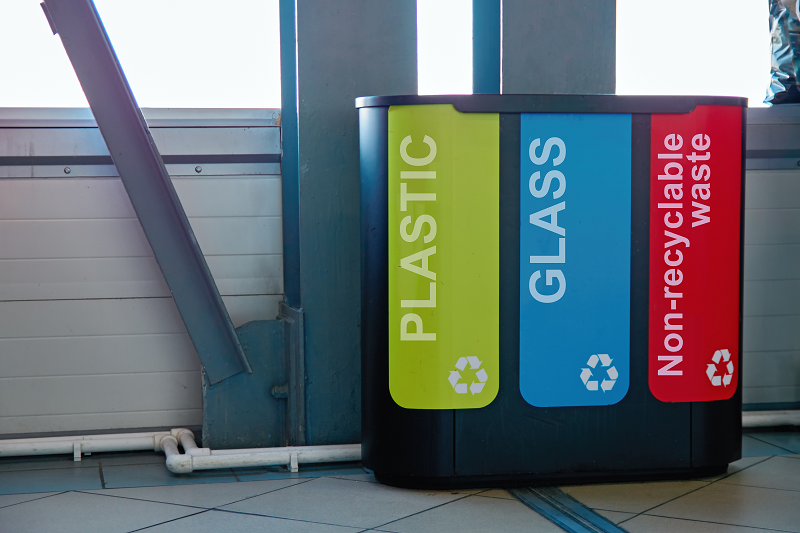
Guided by the principles of reduction, recycling, and harmless disposal, the Action Plan for the Comprehensive Management of Solid Waste focuses on establishing a full-chain management system for solid waste. It clarifies multi-faceted tasks including source control and reduction, standardized collection, transportation and storage, enhanced resource utilization, improved harmless treatment capacity, and special rectification in key areas. The plan also supports these tasks with improved full-process supervision and law enforcement, a sound system of laws, regulations and technical standards, as well as policy guarantees such as land use, fiscal, taxation and financial support. Additionally, it emphasizes organizational leadership, publicity and international cooperation, and sets specific targets for 2030: the annual comprehensive utilization volume of bulk solid waste will reach 4.5 billion tons, and the annual recycling volume of major renewable resources will hit 510 million tons. The plan is designed to facilitate the building of a Beautiful China and advance the comprehensive green transition of economic and social development.
No.4
EU Launches First Batch of Circular Economy Pilots with Focus on Plastics Sector

The European Commission has rolled out its first set of pilot actions for circular economy transition, with a particular focus on the plastics sector. Adopting a two-step strategy consisting of "short-term actions plus the introduction of a Circular Economy Act in 2026", these initiatives cover formulating EU-wide end-of-waste criteria for plastics, setting rules on recycled content in PET bottles, relaunching and strengthening the Circular Plastics Alliance, establishing separate customs codes for virgin and recycled plastics, stepping up market monitoring and project support, and launching a review and consultation on the Single-Use Plastics Directive. These measures are designed to address multiple challenges facing the plastic recycling industry, drive emission reduction and decarbonization, enhance industrial competitiveness, and facilitate the transition to a circular economy.
-END-